Virginia Home Grown
Sustainable Landscaping
Season 26 Episode 2 | 56m 46sVideo has Closed Captions
Learn how to cultivate a sustainable home landscape!
Meet two garden professionals that take very different approaches to the shared goal of creating eco-friendly home gardens using traditional and non-traditional methods. Engage with us or watch full episodes at Facebook.com/VirginiaHomeGrown and vpm.org/vhg. VHG 2602 April 2026.
Problems playing video? | Closed Captioning Feedback
Problems playing video? | Closed Captioning Feedback
Virginia Home Grown is a local public television program presented by VPM
Virginia Home Grown
Sustainable Landscaping
Season 26 Episode 2 | 56m 46sVideo has Closed Captions
Meet two garden professionals that take very different approaches to the shared goal of creating eco-friendly home gardens using traditional and non-traditional methods. Engage with us or watch full episodes at Facebook.com/VirginiaHomeGrown and vpm.org/vhg. VHG 2602 April 2026.
Problems playing video? | Closed Captioning Feedback
How to Watch Virginia Home Grown
Virginia Home Grown is available to stream on pbs.org and the free PBS App, available on iPhone, Apple TV, Android TV, Android smartphones, Amazon Fire TV, Amazon Fire Tablet, Roku, Samsung Smart TV, LG TV, and Vizio.
Providing Support for PBS.org
Learn Moreabout PBS online sponsorship(lively music) >>I try to say, "Hey look, what we can do is overseed, overseed, overseed.
Choke out the weeds with grass instead of the weeds choking out the grass."
>>You could have like a gigantic shrub, and that's okay, right?
A hazelnut.
Now everyone's eating.
Chestnut.
And we're pushing those because that is a stately looking tree.
And in 20 years, your HOA is gonna be donezo.
You guys, it's the apocalypse, and you're gonna have all this nut meat coming out of the sky.
>>Production funding for "Virginia Home Grown" is made possible by: Strange's Florists, Greenhouses, and Garden Centers, serving Richmond for over 90 years with two florist shops, two greenhouses, and a garden center located throughout the metro Richmond area.
Strange's, every blooming time.
And by Sally R. Youngs, in honor of the Grateful Deadheaders Resident Interest Group.
And by: (birds singing) (uplifting music) (uplifting music continues) (uplifting music continues) (uplifting music continues) >>Welcome to "Virginia Home Grown."
The sun has warmed the soil, creating the perfect conditions for planting the summer crops and flowers.
Today, we are talking about sustainable landscaping with suggestions and new approaches to gardening for you to consider adopting, including some plants such as this little-known evergreen native plant for dry shade to part shade, Zizia aptera, heart-leaf Alexander.
We always enjoy hearing from you, so remember to send in your questions: vpm.org/vhg.
A little later, we will meet a landscaper from Richmond who focuses on conservation landscaping.
But first, Dr.
Robyn Puffenbarger takes us to Charlottesville to meet Phillip Rich at Black Roses Landscaping, a fully electric and organic lawn care business.
Let's get going.
(mower humming) >>Just like a lot of landscapers out there, we've got big riding lawnmowers that are zero turns.
Also the push mowers, edgers, hedge trimmers, chainsaws, just about everything you can think of.
But we have moved to fully electric everything.
So our zero turn is something that is really awesome, very quiet, does the job very well, and yeah, we can do really large properties very fast.
So it has a capacity of about 22 acres, which equates out to be 8 to 10 hours of mow time, just on one charge.
>>Wow, that just sounds so amazing.
I'm used to, with my small push mower, I've got several batteries that I'm gonna have to interchange in and out in order to do what I need to do around my place, and then use a much larger gas mower where I need two sets of ear protection to save my hearing.
And I was just amazed at how quiet the mower was as you were demonstrating how it worked.
>>Yes, yes, and for most homeowners, two batteries with a fast charger will do you with a push mower.
But for larger properties and for us as landscapers, we're, you know, in an attempt to be in and out as much as possible, save our time, and mow things efficiently and quickly.
So that's where we come in.
But for the regular homeowner, two batteries does just fine with a good charger.
Just switch them out as you need, and keep on going.
>>Wow.
So there's just a whole different suite of equipment now available to avoid the use of gas.
I know some neighborhoods are now eliminating... They will not allow you to use a gas leaf blower.
>>That's correct.
There are municipalities that are banning the use of big blowers, and so that's where we come in.
So it's not something that's been around for a while, but the technology has come far, and we're just utilizing it.
>>So besides the electric use with all of your tools, you might be doing some other things differently when you have a homeowner who still wants, you know, some classic lawn areas.
So tell us about the seasonal regime you're using.
>>Especially in the spring, we really try to bring in some good soil that really does well for root establishment.
Really good potassium, and that just really does good things for it.
But a lot of people are using fertilizers.
We try to stick away from that.
And so I try to say, "Hey look, what we can do is overseed, overseed, overseed.
Choke out the weeds with grass instead of the weeds choking out the grass."
And so yeah, that's what we do.
We just try to overseed, and over time, slow is always the better go.
Instead of just trying to use a lot of herbicides, we're on a slope here; it's gonna go right into a waterway.
We realize that everything that we put into the lawn, it's going somewhere.
>>And in terms of doing organic landscaping, what are some of the things that we could do, or we could ask for as homeowners, as we're maybe changing over lawn or spaces into planted beds or edges or wilder areas?
>>So for mulch bed areas, what we use is a double shredded, if not more than double shredded, hardwood bark.
First, the nutrients in hardwood bark are just perfect for most plants, so that's what we use.
But the reason why we're using double shredded or more is that when it rains, it binds, instead of a more thick mulch that when it rains, it can flow away.
The landscaper requirements are two to three inches of mulch.
If you're using enough mulch and something that's good and shredded, binding itself together on top of an organic pre-emergent, oh man, it does the job just great.
>>So I'm not gonna see so many weeds poking out of my beds.
>>Indeed, indeed.
And there's always something organic that's out there.
Certified organic.
Make sure you're using those certified organic products.
There's lots out there.
Just take a look; you'll find it.
>>So for a homeowner like this, they are clearly wanting some grass and then some other areas that are left more natural.
How do you all work within that scope?
>>We're not just landscapers and mowing and blowing and all that, you know, jazz right there.
We're also gardeners.
We take care of hedges, flowers, we're mulching, we're doing just about anything in the yard that some people want to do.
Some people don't.
It just depends on where you need us.
>>It seems like in this neighborhood, there's a lot of flexibility.
The front where you drive by, you've got the classic boxwood hedge, you have the beautiful grandiflora Southern magnolias that are gonna be beautiful in the summer.
And then you come around to this like, secret garden.
So how do you help a homeowner achieve balance, especially if there's an HOA involved?
>>That's a good point to bring up.
HOAs usually don't want to see a whole lot of wilding in the front yard.
But then in the backyard, that's where we really try to bring in some pollinators, some things that are more native that allow for the wildlife to flourish.
>>I was noticing one of your transitions in the front was away from the Asian wisteria, which a lot of people now in the South have learned to fear as it will pull your house down, or your trees down, to another species.
Do you want to talk a little bit about that choice?
>>Yes, the Asian wisteria is very, it's invasive, so we try to stay away from that.
The American wisteria is awesome, very beautiful.
It's something that is just a great accent to a house.
We can structure that, we can train it to go in the way that we want around a trellis, whatever it is, and make it just look really beautiful.
It takes some years to get the right look, but after it's established, it doesn't run off.
(laughs) It stays put.
>>It's a plant I wish more people knew about because I think, classically, people see the Asian wisteria and know in the South it has done some things: pulling down trees, pulling down porches.
It is an overgrowing plant.
>>It'll pull your siding down.
(laughs) >>And I know one of the things I've added in my yard are the buckeyes.
Now mine are all gonna be trees, hopefully eventually.
They're growing very slowly.
This homeowner has buckeyes in a use I had never seen.
>>Mm-hmm, they're a hedge.
So that way, as the homeowners are walking around in their more used property, they can enjoy it.
The wild can be wild.
>>Well, thank you so much, Phillip, for showing us this property and how you're using the electric equipment to maintain the just beautiful area.
>>Well, thank you so much.
Yes, we're doing our best to save the earth as much as we can while at the same time getting the job done as professionally as possible.
>>While it's easy to stay set in our ways, it's important to explore new practices.
And Robyn, we've got generations of lawn care practices that have not been sustainable.
So I understand you have some new ones to share with us today.
>>Yes, we got some great tips from our visit last time with Phillip at Black Roses Lawncare.
And one of the things I've done occasionally is some seeding to try to thicken up the lawn where it gets thin.
And he had some really great ideas.
I've just got some very rich black soil.
>>That is gorgeous.
>>And because the grass seed needs to make sure you touch soil, and I don't really have a way to get the stuff out of the way, what I'm gonna do is what he suggested, and I'm gonna just put some of this in so that now I've got a soil base where it was thin.
>>Right, nice thin layer here.
You're not putting a thick layer, just a thin layer.
>>And then I'm just gonna... 'cause I've got just some patchy spots.
Now, if I wanted to do this more globally, I would probably get out, like, my little seeder feeder, and I would be spreading it more.
And then I'm gonna come back and make sure that I am watering this.
That's one of the critical features for thickening up, improving your lawn, is making sure when you're seeding, you're getting at least a quarter of an inch every few days.
Especially if it's like now; we're not getting routine rains.
>>You know, so many people don't realize how important it is once that seed germinates that it's gotta keep that root moist for it to go down, for the shoot to come up, and for it to all work.
It's such a delicate situation there.
>>It really is.
And so what I'm then gonna hope for is that by doing this really thick overseeding, maybe a couple times in spring, a couple of times in fall, that I'm gonna really thicken up this lawn patch, and then I won't have to weed, feed, and seed.
I can just seed, seed, and seed.
>>Truly, yes.
>>And then the other thing that can be really important to a lawn is lime.
And so this is the pelletized lime, and you would set your broadcast seeder, and it would just broadcast that into the lawn.
The grass really likes that more alkaline pH.
>>Truly, which means you need to take a soil test because you have to know how much to put on; you can't guess at this.
>>That's correct.
And that's where, like, your cooperative extension office comes in.
They are really great.
They have the soil tests, they're done very inexpensively, and they will give you great advice.
And they're super great in terms of, they will help you learn how to do the soil test.
'Cause you don't just dig a hole in one little spot.
You're actually supposed to dig 10 holes, combine the soil from all 10 of those spots across your lawn, and then have that tested.
And then that will give you an idea of how much lime you need to add to your turf.
>>Truly, 'cause even local libraries have that test kit often.
You gotta check in case your office is far away.
Check the library first.
>>That's right.
>>But then the next follow-up is cutting the grass.
And this is where a lot of people seem to be a little confused because they all want that neat, tight, trim look.
And that's actually the worst thing for this plant, the grass, so... >>That's right, you really want... I mean, this is its photosynthetic power, so you really need some blades up here.
So I know for me, I set my mower at its highest level all the time, which is probably around four or four and a half inches.
And so we're just making that transition.
We just don't wanna mow as often.
We don't wanna have to do the feeding and weeding treatments on our turf grass.
And so by just letting the grass grow, we get that bigger, thicker, fuller look.
And it's just a little bit of a different change in your aesthetic.
And then all of a sudden, you have a lot less work to do.
>>Well, it's the old, the higher the grass grows, the deeper the roots grow, and the deeper the roots grow, the more drought-resilient it becomes.
Plus, that grass shades the soil surface, which reduces seed germination; weed seeds don't germinate as well.
But it also helps retain moisture in that soil surface as well.
Again, helping the grass to grow.
I mean, so many little changes, but they have such a big impact if we can just raise that blade to four inches.
And I know it's hard, even in the spring.
Like you, we cut our grass at four inches all year long, you know, during the season, of course.
And the benefits are just monumental.
But the other thing I do is I also aerate my lawn.
We try to do it about once a year.
Sometimes we don't make it, but we use a core aerator to make sure we get some good oxygen down there.
'Cause that turf gets so thick, we need to get a little bit of space there for it to grow.
And it'd be a perfect time to put down what you're saying.
>>Yes, maybe that's a tip I need to take home to my house is doing a little aeration.
I don't think it's ever been aerated.
And so in some of the places where we'd like to play games outdoors, where you want that nice, soft grass to walk on and enjoy, it's really important to do that as well.
And the other thing I have read and heard is don't bag your lawn clippings.
Let the clippings lie.
Especially if you have a mulching blade, that's really important to adding some of that fertility that comes off of the blades.
When you cut that, let it go back onto the soil to decompose and add the nutrients right back to the soil.
>>Yes, and I understand there's times that we go on vacation and it gets a little high, and, yes, you can rake off the excess then.
But then I put that in my compost pile because I haven't put any chemicals on my lawn, any products of any sort, you know, except organic ones.
I've got the ability to then enrich my compost and being able to keep that nitrogen on my site rather than carry it off to a dump so that we can enrich all of our plants, even through our lawn.
Who knew?
>>That's right.
>>Yes, new things and new ideas.
Thank you, Robyn, for showing us some new ways to thicken our lawn, as well as to be proactive and more sustainable with our landscapes.
And now we're going back to Phillip and answer some questions you sent us about sustainable landscaping.
But before we get started, our team is on Facebook waiting to answer your gardening questions too.
>>So we have some viewer questions.
And the first one is, "It seems like with electric mowers there are lots of push options.
I know I have one and really like it, but ride-on models are less common.
Do you think that will change?"
I'm very curious about this too because I would really like to get off that big engine that I am riding on.
>>Indeed, indeed.
Yes, I do believe that will change with more and more people having larger lawns.
The push mower is great, but if you're talking about an acre or even a half an acre, you kind of want to get off of that.
So, yes, I do believe there are a lot of different companies that are gonna be moving into something that is either individually battery-charged or something that is charged more like a car.
>>Excellent.
I can't wait to see that.
This is a question I have for myself as well.
Do you bag or leave grass clippings?
What are the benefits of either?
>>So, we do not bag.
Actually, the nitrogen, as you're cutting fresh lawn, fresh grass is actually good for the grass to regenerate.
So we do not bag.
There are some clients that ask us to bag; that's fine.
There's a benefit and downfall to both.
So when you're not bagging, you can build up quite a bit of thatch depending on how well the soil is actually breaking down those components.
But if you're bagging, it's just, no thatch, it just won't pile up.
>>I would rather have my grass clippings be my nitrogen source than something else.
So that sounds great to me.
>>I think so.
>>So what role does conserving water play in a sustainable home landscape?
>>Mm-hmm, anytime you have something newer, when you're just freshly planting, you wanna make sure that those plants are still getting a good bit of water.
So in times where it's a little bit more dry, like today, it's been dry for a couple weeks, and that's when you would want to go ahead and water your plants.
I say it this way: the way the plant looks, as tall as the plant is, is as deep as the root is.
So you want those roots to get really far into the ground so that they're stretching, reaching for that moisture.
But other than that, once the roots are established, you can let it go.
>>Yes, I've noticed that for my plants at home, if I'm not careful, especially when I'm trying to establish something that should be pretty drought tolerant, if I don't take care of it that first year or two, I've lost a few more than I would like to admit over time.
>>Indeed, indeed.
>>So what are some eco-friendly ways to manage pests?
>>Okay, okay.
So, you know, we have the Japanese beetle, and they actually start in your lawn.
So they start underground.
So we say something about, if we find one, if we're putting in new plants or whatnot, if we find one every foot, we say, you know, go ahead.
It's about time to do a Milky Spore application.
And that's something fully organics you can use.
And it's actually really great.
So when we use it, I think it's twice a year over the course of five years, and it lasts 30 years, so you don't have to apply it anymore after five years of use.
It's a little bit of, and I think with organics, you have to use it a little bit more to get the benefits long-term.
But that's pretty good.
Five years in, 30 years out, I'd say that's worth it.
>>Especially when you see the damage that a bad year of Japanese beetles can do in terms of defoliation, taking out your flowers.
They can be pretty heavy-duty pests.
>>They can, they can.
>>Let's see.
And then what is your approach to managing soil health and applying fertilizer?
>>Yes, so, again, we are fully organic, and so we just use good old earth.
We bring in some healthy soil.
We have a great farm that's local to us that we source just about everything from mulch to compost.
And then we have a super soil that we use that will spread out into the lawn, and we're not using too much 'cause there are a lot of things that leach: nitrogen, phosphorus, potassium, some of those things, you know, they leach pretty well.
So we're using just enough to establish a good root.
And then after that, we let the lawn take care of itself.
>>Excellent.
In terms of your pre-emergent, what do you do if you think you've got some pretty tough weeds that are gonna come out?
Can you use pre-emergent?
Is there an organic version for lawns?
>>The best method is always pull weeds first.
That's our method first.
Before laying down good mulch, we pull the weeds, pull the weeds, pull the weeds.
Then we're smothering it with the mulch, two to three inches.
And then after that, we're using an organic pre-emergent that keeps you out of your garden for quite some time.
And you know, with organics, it's just like any other substance that you're using in your lawn.
Sooner or later it's gonna break down.
It's not gonna be usable anymore.
You're not gonna see the benefits.
And so, you know, three to six months it might last, but in a rainy month, it might just be that month that it lasts.
>>Well, thank you, Phillip, for all your expertise in answering all these questions.
>>Oh, no problem.
Please give us a call if you have any other questions.
I'd love to answer 'em.
(lively music) >>Sustainability is an important thing that everybody should be thinking about.
And as gardeners, there are many things that we can do for sustainability in our environments.
We always have a lot of materials that are plastic, from plastic bags to plastic containers.
So if we can reuse those and keep them out of the landfill, then that will be the best result for our environment.
What I'm going to do today is let's just do a simple project and paint the container, but we can also make it fun.
All we need is leaves that you can collect from your own garden, some spray paint, some tape, and a little sandpaper.
So I have my container here.
All we need to do is use the sandpaper, and we're going to scuff up the container just a little bit.
You just want to get some of that glossy surface off.
(sandpaper scratching) And then it is as simple as attaching a few leaves that we have collected.
And it's basically going to be a stencil.
And we'll add another little piece here.
We just want it to stay on long enough to spray paint the container.
So we can just add on leaves.
Just stick it right on.
Doesn't have to be perfect.
It adds a little character.
(spray paint can clicking) Now when we're ready for spray paint, to protect the table, I even will save my soil bags that I get, and would use that for projects like this.
It's just thinking ahead and using any of the material that we have bought and be able to reuse them to try to keep them out of the landfill.
Now, when you're spray painting, just make sure that you are using nice even (can hissing) coats.
You don't want it to get too thick.
And I can see this leaf is moving, but it's okay 'cause this is just a fun project.
So nice even coats, (can hissing) even on top of the leaves 'cause all we want is just to have the pattern of the leaf and the black will show through that.
So we've got pretty good coverage here.
(can hissing) And let's see if we've got any leaf pattern underneath here, so we can just remove our leaves.
So this is nice little fun decorative thing that we can do, especially when the kids are getting out of school pretty soon.
And you can see where the black is starting to show through.
So get out there, get your hands dirty, painting your containers.
We're keeping these containers out of the landfill is a win-win for everyone.
>>Sustainability includes the three Rs, reduce, recycle, and reuse.
Serome showed us a creative way to reuse containers by recycling them as planters to reduce waste.
Next, we meet another landscaper who's passionate about our environment.
I visited Jessy Woodke from "Undoing Ruin" at a homeowner's site he transformed in Richmond.
Let's take a look.
>>I used to have this yard that was full of grass, like everybody else.
And, you know, everybody seems to to want that.
But a few years ago I planted some passion flower, which is like my show plant here, and it started spreading.
But, you know, the first year, it was just like around the mailbox.
And then next year, it was all over here, and there's just the beautiful purple flowers that everybody loves.
I started digging up sprouts as they came up and put 'em out on the table and sign: "Free passion flower."
And every day people were just taking 'em, taking 'em, taking 'em.
And, you know, that's my hope is kind of just trying to spread these native plants to people's yards and maybe make a small dent in the green desert that some of these lawns are.
>>When I was youngin of 20 something, I randomly started college, and I took an ecology class.
And then I found out what was wrong, and I realized that we deserve better.
>>Yes, we do deserve better.
So when you walk onto a landscape, what do you see that I may not see?
What do we see differently?
>>Well, you're special, Peggy.
>>Aw, thank you.
>>But most people just see something that they have to maintain.
What I see is energetic potential.
And what I see is abundance.
And what I see is one bird that wishes that there were five more birds nearby.
>>And so what are the steps you take?
What's usually your first step when you're approaching a landscape?
>>So as I approach a landscape, I take a look at the plant composition.
Is it grass?
Is it all invasive species?
Does it look like somebody has a thing for blueberries?
>>Yes.
(Peggy laughing) What's their favorite color?
>>Exactly.
And I start to map out the energetic flows on the land.
You know, the wind, the sun, the people, the kids, all of those are energetic flows.
And my goal is to find a way to stick my foot in the way to get some of that potential energy and put it into action.
>>That's excellent.
Kind of trip people up with new thinking.
>>That's right.
>>Yes.
What are your top five plants?
I mean, when you look at a landscape and see what's missing, what are your choices to immediately go to?
>>Okay, now, I hope this doesn't ruin the business model because yikes.
All right, let's see.
My top favorite plants I guess would be, and they're right here, elderberry, Sambucus canadensis, Aronia, Aronia arbutifolio.
The berries hang on longer.
>>They do.
>>Rudbeckia laciniata, mountain mint.
How many are those?
Four, five.
>>That's good enough.
>>Yeah.
>>Yeah.
And you had mentioned the Rudbeckia, but you also love passion flower too.
>>Oh, I love passion flower.
>>Yeah.
>>Okay, so I have this cool trick.
>>Okay.
>>Those who know Rudbeckia laciniata knows that it can be very tall and unwieldy, but it's also like one of the most delicious greens you're ever gonna eat.
So you take passion vine and you pair it with Rudbeckia laciniata, the Rudbeckia laciniata gets some height on it before the passion vine wakes up.
And then as it wakes up, it finds the trellis in the Rudbeckia.
It wraps up the Rudbeckia into a tight little clump rather than a big sprawling mess.
>>Nice.
>>And they bloom together and it's just a big mass of delicious plants that are medicinal.
And they suck carbon right out of the sky, and they cover the ground, they create habitat, et cetera.
It's one of those things that's stackable.
>>Yes.
And they're beautiful.
>>Yes.
Beautiful to boot.
>>Beautiful to boot.
And speaking of beautiful, in the backyard, there's a landscape that I'll say is a little bit more traditional, but it's beautiful and it's all native plants.
>>Okay, so diversity of tactics.
What can we get away with?
Where can we push boundaries?
And what's going to start offering rewards?
Which gets me the in for the edible or native plant.
And then I just stack the design, just like any other standard antiquated landscaping design might do, except they're just native, simple.
>>Very simple.
But what about the tree element?
What are your thoughts on how do you approach food forests if somebody wanted one?
>>First of all, I put the attractive things up front so that the neighbors can see them.
I try and mimic suburban architecture by creating lines, which we're all used to now of plants.
And plants that are really good for that are thickening species like pawpaws and plums.
And boom, you have a fence that you don't have to paint that is offering food to you and the neighbor.
Then you plant the colorful things that someone wants to ask about.
And then you get to tell them, "Guess what?
I don't have to buy that berry because that berry just happens to be growing here native."
>>Yes.
(Peggy laughing) I noticed you have a lot of strawberries around and other edibles.
I think it's great.
I love your approach to that.
>>Thanks.
>>Yes.
So how does a conservation landscaper get around an HOA?
>>Oh, you undermine the system.
You go in there, you just take the native plant that kind of looks like the non-native invasive species.
And then you just put that there.
Make sure it's not one of the kinds that escapes.
We don't put Rudbeckia laciniata at the HOA.
>>Right.
>>But we can put like little patches of mints and then we outline it.
Or we plant a tree that just kind of looks like a tree but in 20 years, that's gonna be like the protein for the entire neighborhood, you know?
Bringing back in hazelnuts.
You could have like a gigantic shrub and that's okay, right?
A hazelnut now everyone's eating.
>>Yes.
>>Chestnuts, right?
And so most of them died on the American landscape because they're so useful and then they got chestnut blight.
But a lot of work's being done right now to incorporate blight-resistant genes into the few remaining sets of genes that we have here in the States for chestnuts.
And we're pushing those because that is a stately looking tree.
And in 20 years, your HOA is gonna be donezo.
You guys, it's the apocalypse and you're gonna have all this nut meat coming out of the sky.
So it really is just doing what looks boring that is actually super exciting.
>>Oh, that's exciting.
Well, you have definitely made this landscape super exciting.
>>Oh yeah.
It was all grass.
>>Yeah, when people walk by and really take a look at it, there are hundreds of plants here.
This is not just 20 plants on a list that you put in.
When you really slow down and start looking, it really does mimic our ecosystem because our ecosystem, you know, I'm sitting here going, many of these are meadow species, but in the back you've made it more of a tamed landscape in the backyard.
And be able to show people, yes, this can be very tame, but you're still 100% native back there.
>>That's right.
>>And that to me is undoing ruin.
I hope it is to you.
(Peggy laughing) >>Ts, ts.
Cool.
>>So thank you Jessy for your energy and for leading the way and pushing that envelope.
>>Oh, stop.
Appreciate you, Peggy.
>>Yeah, teaching us to push it out there so that we can all learn and find where we're comfortable, but still moving toward more sustainability.
>>Absolutely.
>>Working with Jessy has been great.
Having him come and just landscaping and showing me what was possible, not only working in my yard, but also trying to work in the greater ecosystem around here, and being kind of cognizant of the landscape that we all occupy.
I have a lot of different kinds of birds and bees that show up to my yard now.
I got binoculars, I'm sitting, you know, the back of my house looking at these birds coming in.
And it brings me immense joy.
Just so many different butterflies and bees and birds.
I love it.
And possums, I love the possums.
>>From contemporary to wilding, there are many styles of landscape design that support self-expression.
And despite the design style that you choose, there's always some dynamic in a landscape that needs to be controlled.
And that's why some of the systems that I developed over time are very helpful for like controlling, I'll say, plants that are very aggressive.
So Robyn, if you could hand me my wonderful black tool.
You know, reuse and recycle is our theme here with sustainability.
And what I've done for many years is I've been able to control plants that wander by corralling them.
And I've taken a nursery pot, a very large one, and I've just cut it to be about eight inches, 10 inches high is good because I want to be able to sink this into the ground so there's only two inches showing.
All right?
I've learned the hard way that if you make it flush with the soil, it doesn't work because what I then do is take my aggressive plants, such as this oregano, which we all know loves to grow and grow and grow.
Or my mint or my Monarda or what are some of the plants that you would put in here that are aggressive?
>>It's the mints.
I would like to have several varieties for their different herbal flavors in my garden.
But the last time we had them, they got totally out of control and we just ended up ripping them out.
It was incredible how aggressively they grew.
>>Yeah.
Aggressive is the word.
Well, with me, even Boltonia just took over the yard and even some of the goldenrods take over and your asters, and we wanna plant these plants, but we wanna have control over them.
And so with this method of cutting the nursery pot, sticking it in the ground.
But here's the trick.
Every spring, I do it very late winter, early spring, I would take my bulb planter and take out three or four, I'll say, core pieces out of this and fill those holes with compost.
And this way the plant has a place to grow 'cause I found it'll just choke itself out if I don't.
>>Now, like for me, I would then maybe give those... >>Plugs to friends.
>>Yes.
>>Yes.
>>You could pot them up and show them the trick of how to have these really wonderful plants that like to go a little too far sometimes.
>>Exactly.
And leaving those two inches, you can cover it with the mulch.
But again, I've learned the hard way, don't make it easy for those roots and those plants to creep over the edge.
So just, you know, think about this, but this is an excellent system.
The bigger the pot, of course the bigger the spot in your garden that you'll have for that plant.
>>Now, would this show, or will you... I know the mulch would come up close, but would it still not show?
>>It shows for a little bit in the spring, but once the plant grows it totally disappears.
>>Wow.
This is one I'm taking home with me.
(Peggy laughing) >>Thank you.
I used it in a public garden for decades.
Nobody knew it was there.
>>Wow.
>>Yes.
So I've got another one too because oftentimes we'll transplant that plant in our garden and maybe we'll get it from a friend and we'll put it in the garden, and then the sun will come out and it'll start to wilt.
So what I have done is, 'cause I was such a basket collector back in the day, is I take a basket and I use that to shade the plant.
And usually I start with a more open basket for lighter shade, alrighty?
But maybe it needs a little bit more shade.
It's still wilting on me in the middle of the day.
Then I get my denser basket and I put that over the plant.
And as you can see, this is very weather worn, but they last quite a number of years.
And I only leave it on for a few weeks.
And if I go from dense to light, usually within another week and a half or so I can take that one off, and my plant has now adapted to the new garden.
It's gone through that transplant shock.
I've removed the sunshine and made it a dappled shade environment so it can get its roots growing and sort of get its feet in the ground.
>>Now, could you use the same system?
Sometimes, you know, we get late frost or cold snaps, and that becomes a real issue for us in the valley that we can get very late frost, sometimes even right up to our last frost date, you know, May 15th.
And it's always how am I gonna tent up this plant?
How am I gonna save it when I put it out maybe a week ahead of time?
>>Truly, truly.
And I would like to say yes, but no, okay?
Because here this basket is still designed to allow air to flow through it, but the sunshine to be, you know, fragmented for a shade.
So you could use this to create the support and then put your sheet over it.
>>Okay.
>>Okay?
Because what the sheet is actually doing is trapping the warmth of the soil up and around the plant.
The plant doesn't generate any heat.
But it's trapping the warmth of the soil up and around it, and breaking the wind too.
>>No, I think that would be great because now you have that built-in unit and putting... That's not a sheet, that's a towel.
And that's a lot easier in the garden to drag out if you've got one or two little tender plants that you forgot or just planted a little too early in your excitement.
>>Yes, and I've also learned laundry baskets.
I'll say the wicker laundry baskets are great.
I mean, you can find tools that you could use, in your case, out in the valley for frost.
And in my case, I can use here in Richmond to block that horrible sun that has just been bearing down on us lately.
It's wonderful but at times, it's a challenge.
So anyway, I've got these two techniques.
One of them is to how to corral an aggressive plant in the garden so that you're not regretting your choice and you still can have that beautiful mint.
And the other one I have is how to then take the plant that maybe you've gotten from your friend and to transplant at an inopportune time in the season, but you wanna get it in the ground to be able to allow it to get itself established before, you know, the true summer heat comes.
>>Thank you for these ideas, Peggy.
I can't wait to take them home and add them to my toolkit.
These are going to be really useful ideas.
>>Well, Robyn, that's good to hear.
I can't wait to hear how successful they are in your garden.
And now we're going back to have Jessy answer the questions that you sent in.
But before we get started, send in your gardening questions to the website at vpm.org/vhg.
>>So, Jessy, we've got our first question here, and it's from Dave.
And Dave is asking, "What sustainable materials do you recommend for paths, patios, or edging?"
>>Thanks, Dave, I appreciate that.
As a landscaper, I generally tend towards leaving the heavy-duty stone materials to the people who do the heavy-duty stone materials.
>>They do it so well.
>>They do do it so well.
And I specialize in plants.
So, if you want a path that is sustainable, I would recommend making your paths out of hardwood mulch.
Inoculated with Stropharia rugosoannulata, or wine cap mushroom.
>>Okay.
>>Mm-hmm.
That- >>So, it's a productive path as well.
>>Absolutely, I mean, like, you want yields on yields on yields on yields, so what I'll tend to do is find where the path is, or the path tends to go, lay down a whole bunch of cardboard and then just pile it up thick with hardwood mulch and inoculated with that mushroom.
And then a year later, that sinks maybe half the height, and you have edible mushrooms.
>>Mm-hmm.
And you are aware of the cardboard that you choose.
It's not the slippery coated ones that come in our packages.
>>No, no, no, no, no, you never use the slippery stuff.
If it's shiny and slippery, that's not the stuff, yeah.
>>Right.
You want true cardboard with a rough texture.
>>Exactly.
>>Yes, okay, super.
Our next one is about irrigation.
So, what type of irrigation system, if any, do you recommend?
>>Love.
(Peggy laughs) And what I mean by that is, if we come by and plant a garden, or if you're just out there planting a garden, it matters to build the structures in your brain that are associated with the care of that plant.
I want the gardener to fall in love with the plant and to want to nurture it.
So, go out and hand-water your plant.
My general rule is, every day for the first week and a half, and then after the first week and a half, hit it once every other day for a month.
And then after that month, keep an eye on it and have it once a week, hand watering, generally in the morning if you can get away with it.
>>Yeah, and if you have a rain barrel, that water's even better.
>>Oh, yeah, thanks for bringing that up.
>>Yeah.
>>So, I put in rain barrels everywhere I can, and I generally try and attach a hose to them that lives there on that rain barrel so I can very easily and lazily flop the hose around.
>>Yes.
>>Let it drip here for a while, kind of move it, let it saturate another area for a while.
>>Mm-hmm, let gravity do its job.
>>Exactly.
>>Yes.
For soils, you know, do you address the soils?
How do you find out what type of soil you have when you enter a site?
>>So, I used to go around and soil test, send everything off, and see what we've got there, but I realized that was kind of a fool's errand for the type of gardening that I'm doing.
>>Okay.
>>If you're in the city, you're likely contaminated.
The idea here is just keep stacking carbon, you know?
Carbon on carbon on carbon, building the soil up.
You never wanna till the soil for any reason, because that destroys this valuable soil structure.
>>Yes, yeah.
>>And if you are on the west side of 95, that's a plant palette.
If you're on the right side of 95, or the east side of 95, that's another plant palette.
>>Mm-hmm.
>>We have definite distinct zones in Richmond.
Just figure out what zone you're in and plant for the type of soil that you have.
>>Mm-hmm, it's all about actually the fall line.
>>That's right.
>>Because east of 95, 95 follows the fall line up and down the East Coast, which is kind of scary, but that's true.
Yes, so good thing.
So, people are saying with our native plants, just put 'em in the soil, add in compost, add in your carbon.
What type of mulch do you like to apply on top?
>>I love the mulch question!
(Peggy laughs) Okay, here's how.
Here's what I like to do.
(Peggy laughs) If it's a brand new garden and soil surface is flat, I like to put pine bark mulch.
>>Okay.
>>Pine bark mulch breaks down over time into, like, really friable, like, quality soil, and it does the job of keeping the bare soil covered.
If I'm on a hillside, I use a hardwood mulch, but I always inoculate it with the Stropharia mushroom.
You wanna generally do that in the spring, but hardwood mulch is beneficial because it doesn't slip down the hillside.
>>Mm-hmm.
>>But it does have this problem of trapping nutrients inside of its body.
Think about a chunk of hardwood mulch as a series of tubes, and water has capillary action, so when it rains, all those frisky, loose ions are floating around the soil, the rain droplet grabs the ion, and then the rain droplet goes into the tubes of the hardwood mulch, locking up that ion from the plant's roots and into the hardwood mulch, making your mulch stronger and your plants weaker.
So, if you're gonna use hardwood, please put a mushroom in there.
>>Yeah, do something to change it over.
>>Mm-hmm.
>>Yeah.
So, do you use mulch to change over a lawn to a more natural existence?
Or you know, what are your steps of taking a lawn and switching it on over?
How does that mulch play in or not?
>>All right, so, killing a lawn, diversity of tactics.
>>Yeah.
>>It really depends on the situation.
Everybody's different.
Here are a handful of tactics.
Solarization that is clear plastic, like, nailed down on all the edges in the heat of the summer in full sun for about a month and a half.
>>Mm-hmm.
>>Most of the plastic's available for this breakdown after that, so choose wisely if you're gonna solarize.
You can also just Roundup the whole thing.
>>Mm-hmm.
>>And that's less desirable, but it gets the job done.
If it's for a larger area and you choose herbicide, you're gonna have to hit it every season with more herbicide to hit the various weeds that come up in the different seasons.
>>Mm-hmm.
>>And this is a question that I get almost every single time I have a consultation, there is so much, what am I gonna do with all of this land that I really wish was, you know, native or, you know, sustainable to some degree?
And I say, just start with the small pocket garden that you're gonna go take care of.
>>Yes.
>>And then in the other places, if you're not gonna solarize and you're not gonna use herbicide, start sheet mulching.
>>Yes.
>>And you can look up how to sheet mulch anywhere.
>>I'm a sheet mulcher.
Question I have, though, is transitioning in other areas.
How do you take the existing landscape?
Do you just rip it all out?
'Cause Renee wants to know, where does she begin?
Does she just have her plants ripped out first or?
>>Okay, Renee, what we're gonna do is the same thing I just mentioned, which is start with a small area and pick a couple native plants, and then just start growing them and loving them.
You're gonna wanna pay attention to all of the edges.
So, if you're gonna start somewhere, find an edge, because that's where all the action happens.
That's where all the birds will be depositing your free plants.
>>Yes, under those trees.
>>That's right.
(Peggy laughs) And then you will have to travel to that edge to take care of your new plants.
And every time you go out there, you're gonna pull a weed, and then all of a sudden, that edge is cleaned up and you have a beautiful garden there, and then just keep it up.
>>Yes.
Well, Jessy, believe it or not, we've covered all of our questions, so thank you so much.
>>Solid.
>>I appreciate you taking the time to spend with us on a beautiful day in the spring, so thank you so much.
>>Thank you, Peggy.
(lively percussive music) >>Throughout my yard, I have flower borders in the front and the back, and some areas are designated just for fruits and vegetables, but I also have the various beds that I've populated with many different types of perennials.
But before those perennials can really grow in, I have bare spots, so what I wanna do is put some lettuce and tomatoes and maybe a patio tomato or bell pepper in the front border.
Some raspberries along the side borders of my house.
Even in some of the voided areas, I'm gonna even dig that up and put some potatoes in those areas.
Every little nook and cranny that I can find, that I can grow some produce in it, I'm going to because it'll also add that biodiversity throughout my garden and throughout my yard, front or back, whatever location that I could have flowers and birds and bees and everything growing and connecting and allow me to be able to produce as much food as I possibly can.
This area that I have right here, I have some beautiful lilies next to me, a miniature roses here.
But in this particular area, I have some weeds starting to try to take over this location, so I'm going to just chew up some of this soil right here.
And remove a little bit of that.
And consider, I have some lilies that are growing, but what do I wanna put next to them?
Should I put this raspberry bush?
These are things that you have to consider.
Perhaps I wouldn't put the raspberry bush there, but perhaps I'll put it right here.
So, I'm gonna put in the foreground right here some lettuce.
That'll grow up and spread out.
Be a nice ground cover.
Put a little bit of that there.
As it starts to get hot, my lilies will cover that up as the lilies first die later on in the season.
What I consider doing is, knowing that I'll have that interest from the Swiss chard that I'll put over here.
And it all will still draw my eye, and that's one of the things that I wanna do, not just remove different plants and flowering plants for my garden, but increase the interest by using different vegetables that will draw my eye, but at the same time, be edible for me.
So, within your regular landscape of beautiful flowers, consider incorporating edible plants.
It'll create a more sustainable landscape for yourself.
It'll allow you to be able to have more organic vegetables.
Try it out.
Happy gardening.
>>Shana's foodscaping techniques are a win-win for the plants and for us by creating gardens that are both productive and beautiful.
I encourage you to learn about a plant's growth habit so you can site it where it can thrive.
You know, we've learned so many ways to be more sustainable in our gardens and also recognize change can be challenging.
So, Robyn, what steps are you taking in your garden that are more sustainable?
>>Well, I was so excited to hear about the foodscaping because that's something I have really changed.
Instead of having my perennial herbs in the garden taking up space from, like, my tomatoes and peppers, I've put them in with my landscape plants.
>>Oh, wow.
>>And I am just enjoying the sage, the oregano, and the rosemary.
And when someone comes in the house now, they'll ask me about, well, what's that plant that they just don't recognize it.
And we pull up leaf and it's tarragon, and so we get a great taste and smell.
I just really enjoy that as a surprise in the landscaping beds.
>>You know, and people have always said, "We've got herb garden here, vegetable garden here, flower garden here."
It just makes sense to blend it all in a reasonable way, like you said, with the tomatoes.
But, like, for me, I have so many deer in my yard that I actually put my garden phlox, mind you, it's not the tall, you know, David or Robert Poore, it's the shorter, but I have it with my oregano, and it seems that the fragrance with the oregano works at deterring the deer from eating that phlox.
So, I mean, at least right now, it's working.
Now that I've shared it, we know the deer are gonna eat it tonight.
(Robyn chuckles) But anyway... (laughs) But I mean, there's just great ways to be able to also, for our plants, to benefit.
Like the lettuce there is gonna be shaded by those tall lilies, and that'll cool it, the ground as well as the air.
And the lettuce will be able to last longer and not bolt so easily.
>>Yeah, these are great ideas.
And I know, for us, as we have eliminated pesticide and herbicide use, now I see so many more insects in all of my landscaped or non-landscaped areas.
And one of the things that was really fun this weekend is, we're really seeing our great big queen bumblebees.
They're out pollinating all of our blueberries, those little white bell-shaped flowers, and it's just such a wonderful thing to see those wild bees all up in our garden.
>>And see, people, when they think of wildlife.
I'm starting now to think more of our pollinators and just the activity and the movement, and as you said, the buzzing and the sound, just the joy.
The garden comes alive.
And again, that blending, being able to use plants in a sort of a companion-planting way, you know.
Carrots do love tomatoes.
Plant those carrots between those tomatoes, and they help offset each other with their pest problems.
And also, the important thing, though, is to make sure we still get the air circulation for disease.
You know, we put things too tight, we'll end up with a disease situation.
So, still, like I said, do the research on the plant so you know how big everything gets so you can kinda give it the space it needs.
I tend to squish things a little and push the envelope.
How about you?
>>Yeah, I like (Peggy laughs) a cottage garden feel.
I don't wanna see bare mulch.
I wanna see lots and lots of flowers or foliage, you know, some green, some yellow, some variations.
I'm willing to cram a little bit.
>>I do, too, because I like how the plants shade.
It keeps the weeds down and it keeps the soil moisture up, which is all about that here in, I'll say, the Mid-Atlantic.
So, Robyn, thank you for coming in today and spending time and being able to share your expertise and some of your tips on how we can be more sustainable.
>>You're welcome.
>>Yes.
And thanks to all of our guests today, and thank you for watching.
Next month, we're investigating meadows, both large and small, in both sun and shade, so send us your questions on meadows using our website, vpm.org/vhg, or through Facebook.
We also welcome other gardening questions anytime.
And remember that you can stay connected with me and the team by signing up for the monthly newsletter on our website again at vpm.org/vhg.
And while you are on Facebook, check out a new baking and bloom tip from Chris Martin.
I look forward to being with you again soon.
And until then, remember, gardening is for everyone, and we are all growing and learning together.
Happy Gardening.
>>Production funding for "Virginia Home Grown" is made possible by Strange's Florists, Greenhouses, and Garden Centers.
Serving Richmond for over 90 years with two florist shops, two greenhouses, and a garden center located throughout the metro Richmond area.
Strange's, every blooming time.
And by Sally R. Youngs.
In honor of the Grateful Deadheaders Resident Interest Group.
And by... (birds chirping) (lively country music) (lively country music continues) (lively country music continues) (lively country music continues) (gentle guitar tune) (calm ambient tune)
Video has Closed Captions
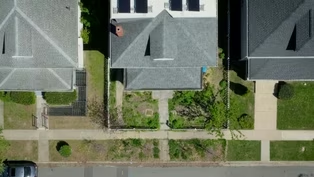
Clip: S26 Ep2 | 7m 58s | Meet a landscaper working to restore energetic potential and abundance in our environment (7m 58s)
Video has Closed Captions
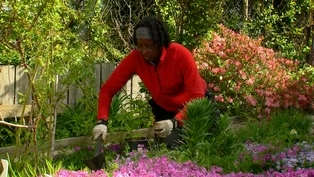
Clip: S26 Ep2 | 3m 6s | Adding more food plants your landscape has many benefits (3m 6s)
Video has Closed Captions
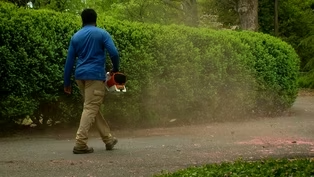
Clip: S26 Ep2 | 7m 18s | Visit a fully electric and organic lawn care company (7m 18s)
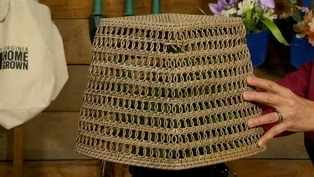
Plant Care with Reused and Recycled Containers
Video has Closed Captions
Clip: S26 Ep2 | 5m 57s | Learn about simple items that be reused in your garden (5m 57s)
Video has Closed Captions
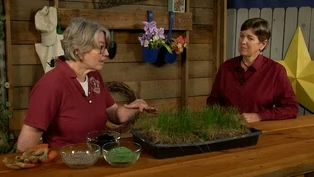
Clip: S26 Ep2 | 6m 9s | Get tips for eco-friendly lawn care (6m 9s)
Upcycling Plastic Garden Materials
Video has Closed Captions
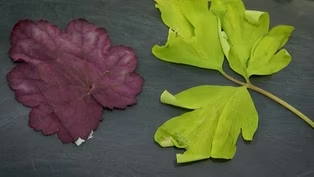
Clip: S26 Ep2 | 3m 17s | Give plain plastic nursery pots a new life! (3m 17s)
Providing Support for PBS.org
Learn Moreabout PBS online sponsorship














Support for PBS provided by:
Virginia Home Grown is a local public television program presented by VPM